Filter By
Categories
Packaging
Particle size
Abrasive family
Using the abrasive
Type of abrasive
Weight
Left Banner
Left Banner

Featured Products
Featured Products


Left Banner
Left Banner


Abrasives for sandblasting
-

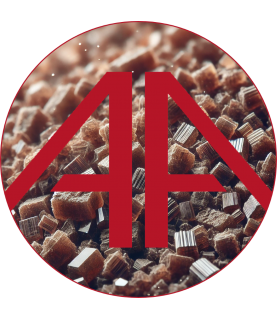
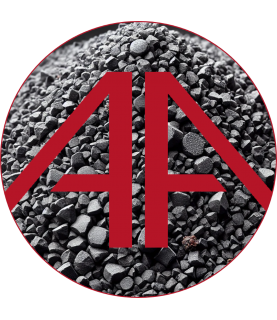
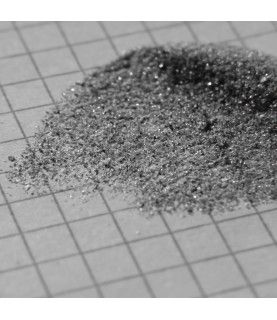
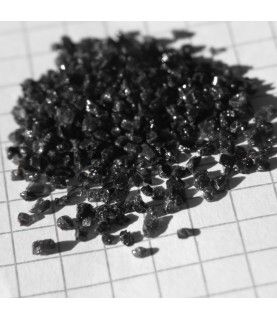
Brown Corundum - ABC
A tough, angular, mineral blasting abrasive ideally suited to stripping metal parts.
This very hard aluminum oxide can be blasted many times, and is widely recommended for use in bag blast cabinets.
-
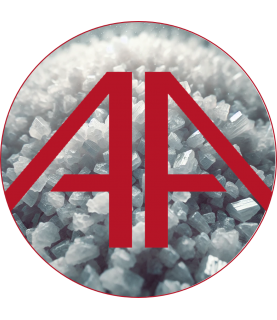
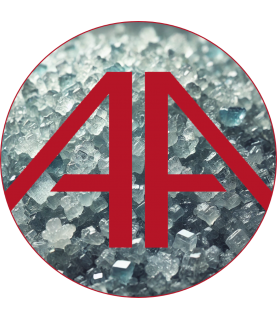
White fused alumina - White Corundum
White corundum is a high-purity, extremely hard aluminum oxide used as an angular abrasive. It is free of impurities and is suitable for applications where iron oxide is not present, as it is non-ferrous.
-
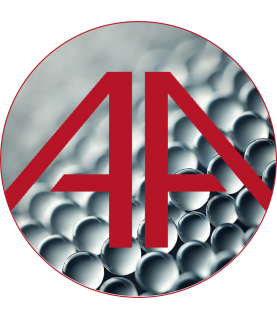
Glass bead
Glass microbeads are a precision blasting media for damage-free cleaning, maintaining tolerances, and are also suitable for deburring and satin finishing applications on metal parts made of aluminum, brass, or stainless steel. Their chemical inertness (insolubility in water or oil) ensures no contamination of the treated parts.
High-quality, durable silico-sodo-calcium glass microbeads (free of free silica) are manufactured from recycled glass in France.
-
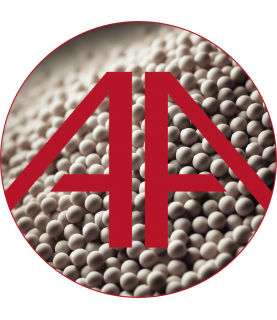
Ceramic Microbeads
Ceramic microbeads are one of the best choices when it comes to bead blasting. They offer superior strength to glass microbeads and require reasonable projection power due to their lightness.
They are made of very resistant zirconia oxide and do not contain iron, which allows the processing of stainless steel and aluminum.
The ceramic microbead is a guarantee of durability and efficiency.
-
Round grit - Stainless steel microbeads
Round stainless steel shot is produced by atomizing Cr Ni Stainless Steel. After various phases to obtain round pellets, precise sieving is carried out.
Its austenitic microstructure offers great durability, making it ideal for surface preparation and finishing. Its stainless properties make this product the perfect option for cases where ferrous contamination must be avoided.
Suitable for pressurized air and turbine blasting processes. It allows for better corrosion resistance and clean, bright finishes. The chemical composition of this round shot corresponds to austenitic stainless steel, which is a class of stainless steel commonly used due to its corrosion resistance and good formability.
-
Stainless Steel Shot
Stainless steel shot is obtained through melting, crushing, and sieving of Cr stainless steel. The high chromium content provides excellent resistance to corrosion and use. It is an abrasive that offers great durability and recyclability due to its high resistance. Recommended for surface cleaning, removal of paints and coatings, and creating surface roughness for treatments that must be free of ferrous contamination. Ideal for the treatment of stainless steel, galvanized steel, and aluminum.
-
Round Shot - Microbeads Steel
The technology used for the production of high-carbon steel shot is the most advanced in the world. We offers shot that meets international SAE standards.
This results in a very high-quality martensitic angular shot. Continuous quality control, combined with cutting-edge production processes, optimizes the shot's lifespan and cleaning efficiency.
-
Steel Shot
High-quality martensitic angular steel shot for shot blasting and sand blasting.
-
Plastic Media Type II
Sandblasting abrasive used for overpressure gumming in sandblasting cabinets.
Type II is the most widely used and versatile media for surface treatment. It has an average hardness within the range of thermoformed plastic media. It can be used for surface treatment in dry or wet environments.
-
Plastic Media Type III
Sandblasting abrasive used for overpressure gumming in sandblasting cabinets.
Type III is a melamine-based thermoformed plastic media. Melamine is the most aggressive and hardest of the thermoformed plastic media (6 times more aggressive than urea - type II).
It must therefore be chosen carefully to avoid damage to delicate materials. It can be used for surface treatment in both dry and wet environments.
-
Almandine GARNET
GARNET blasting abrasive, used for surface treatment operations by impact as well as for water jet cutting.
-
Calcium silicate - SCOREX®
Abrasive for free-blast sandblasting and stripping with mobile sandblasters
-
Aluminum Silicate
Abrasive for free-blast blasting and soft stripping with mobile sandblasters or airbrushes.
Ideal for replacing SCOREX® SC250 (fine grid).
-
Iron Silicate
Sandblasting abrasive for free-blast or airblast applications, ideal for cleaning and stripping metal and stone/concrete, removing scale, rust, old paint coats and various dry impurities.
-
Angular Glass
Angular abrasive made from recycled soda-lime-silica glass, which is ground and sieved to produce particles with angular edges. The particles have sharp edges, making them effective for polishing and cleaning.
-
Sodium bicarbonate
Soft blasting abrasive, ideal for open-air blasting to remove graffiti or stripping sensitive parts.
-
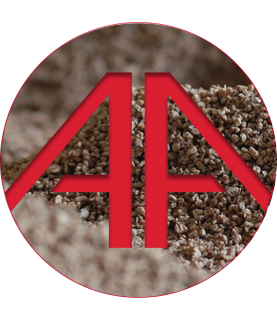
Vegetable Abrasive
Abrasive for sandblasting, stripping or other impact surface treatments. This sandblasting abrasive is made from agricultural by-products such as walnut shells, pine nuts and fruit pits.
-
Archifine Sand N°4 (25kg)
Archifine Sandblasting Sand N°4, the 25kg bag
Product unavailable; See the SCOREX SC250 article for equivalent abrasive.
-
Sand Archifine N°6 (25kg)
"Archifine" sandblasting sand N°6, the 25 kg bag
Out of stock: see equivalent product Scorex SC06 -
RUGOS 50/80 Sandblasting Sand
Rugos 50/80 sandblast sand, 25kg bag.
Product unavailable, see article SC06 for equivalent abrasive.
-
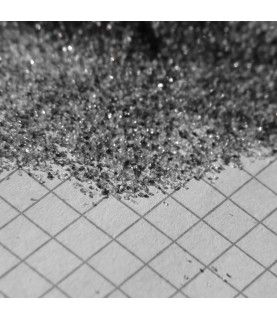
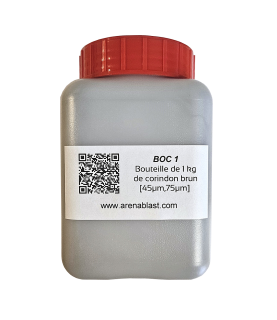
Bottle of brown fused alumina
Bottle of brown corundum grade 220
CODE : BOC 1