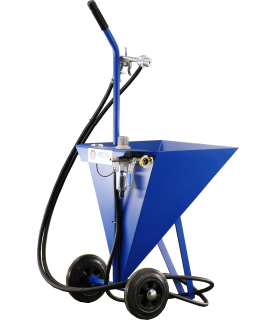
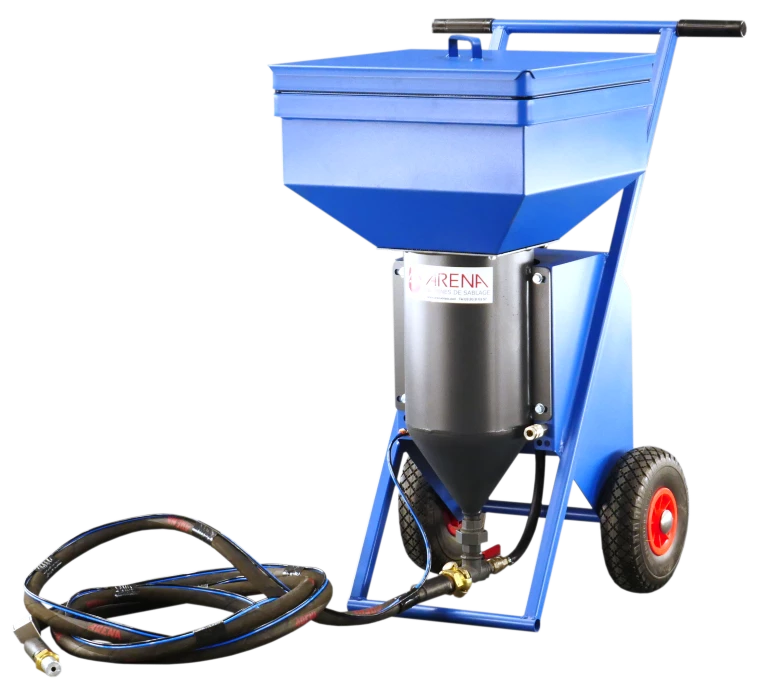
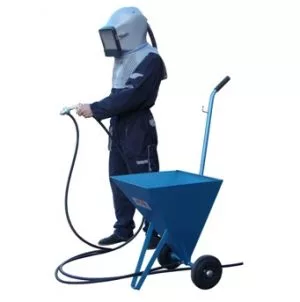
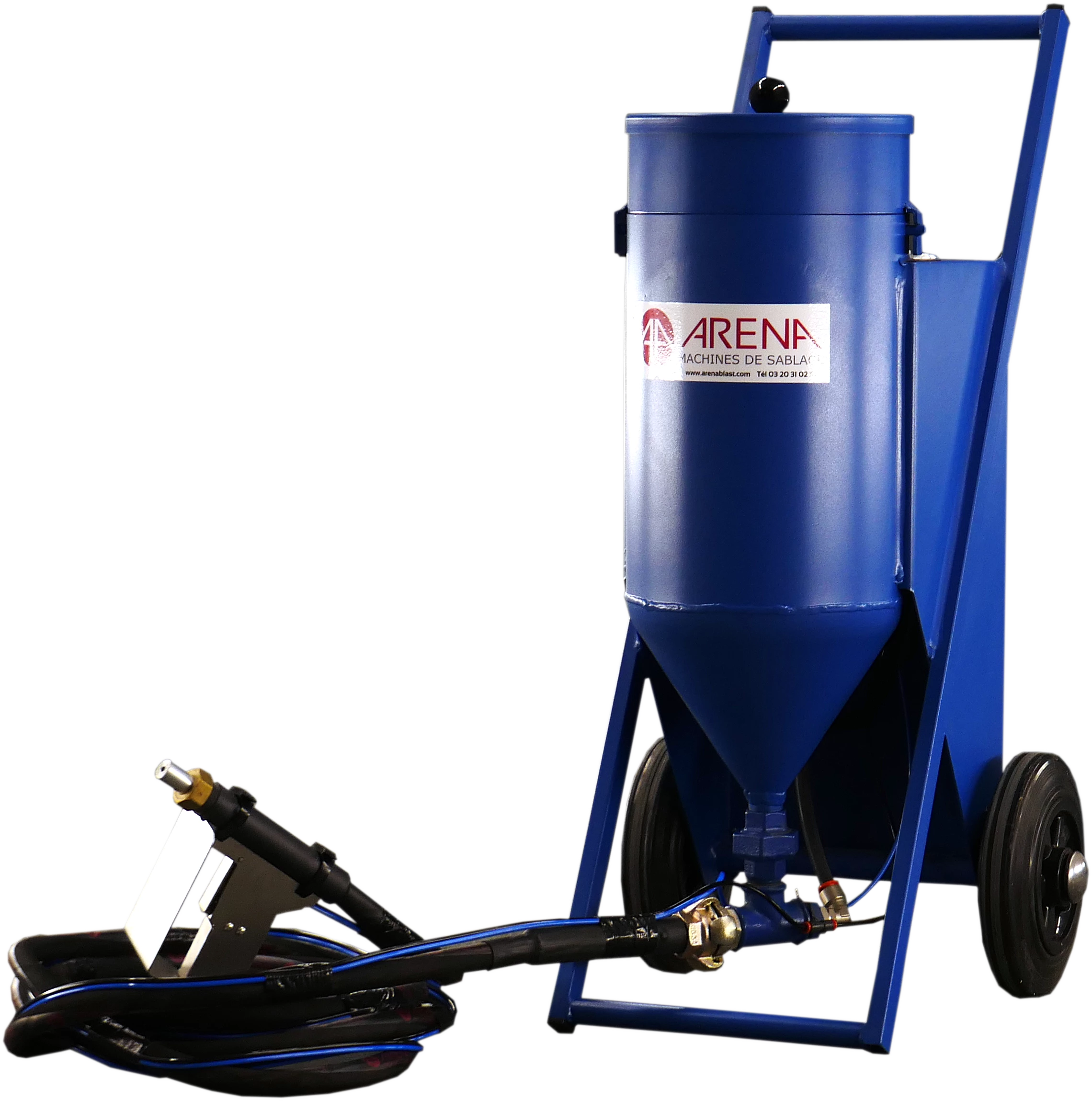
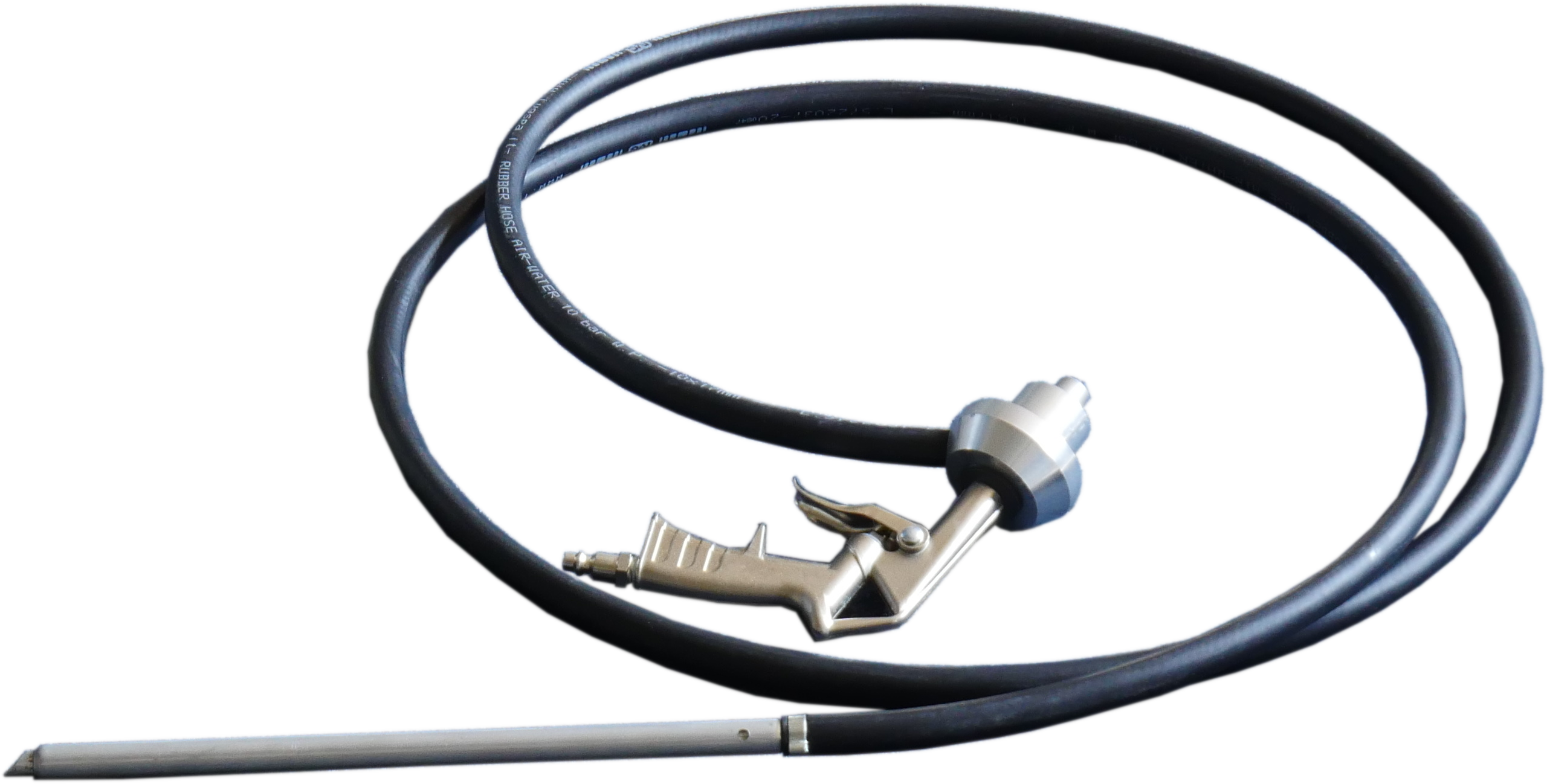
A sandblaster is a surface treatment tool that uses blasting of sand (sandblasting) to clean, strip or prepare different materials.
The sandblaster requires abrasives (material used for sanding, usually sand but also glass microbeads or corundum) that it will project onto the surface in order to strip paint, rust, encrusted dirt, etc.
Sandblasting is now used in many industrial and professional fields to facilitate the cleaning and stripping of many parts, especially after long storage.
For example, the construction sector to clean surfaces such as stone or concrete, the automotive industry which prepares bodywork with a sandblaster before painting them, or furniture restorers to remove paint or varnish.
All types of professionals can use a sandblaster, mobile or not, to remove rust or impurities and restore a new look.
There are 3 types of sandblasters that are useful in different cases depending on the size of the surfaces but also the frequency of use ;
- Pressure sandblaster: Ideal for large areas and regular, heavy-duty work
- Vacuum sandblaster: With its more compact format, it allows easier movements but it is also suitable for small jobs
- Sandblasting booth is reserved for small items that can fit into the booth. Its closed and airtight working environment allows the abrasive to be recovered, recycled and to make significant savings in media consumption. It is also a system that allows the operator to work more comfortably and precisely because the PPE will be much more limited than with mobile sandblasters. Indeed, wearing a mask, gloves and goggles will potentially be necessary only during the loading/unloading phases of the parts in the machine. During sandblasting operations, only earplugs are recommended.
With different models to meet all sandblasting or shot blasting needs, ARENA BLAST sandblasters and airgummers are able to increase to a high efficiency with their power that varies according to the size of the sandblasting nozzle chosen.
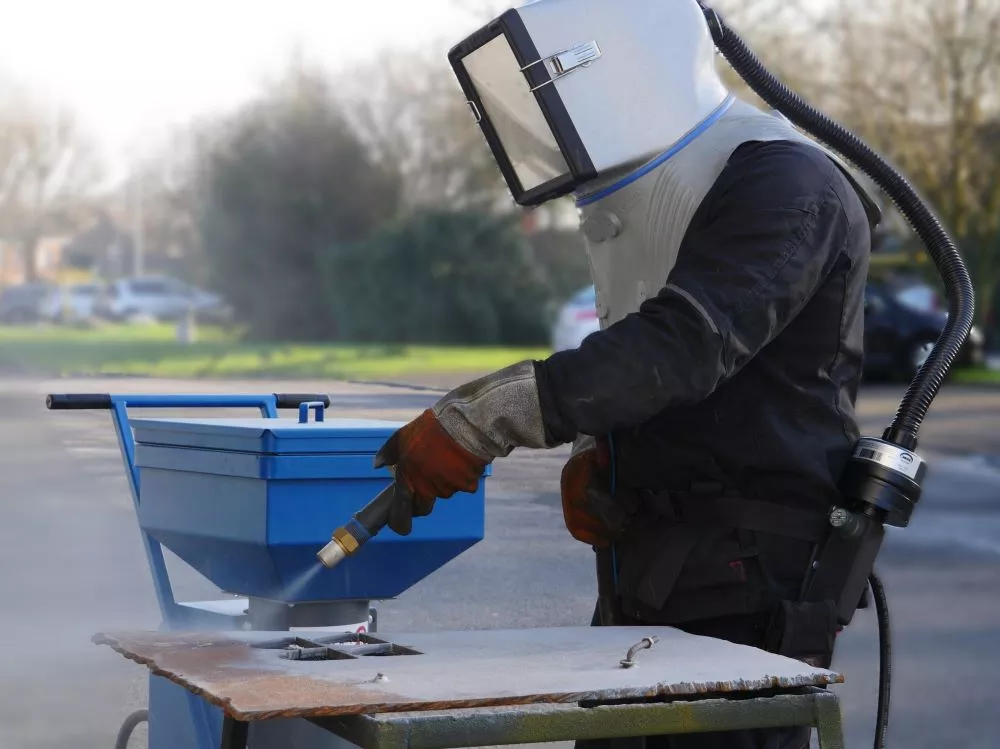
A very effective tool, the sandblaster is also a tool that requires some precautions. We recommend using suitable personal protective equipment (goggles, gloves, mask) to avoid the risk of injury or contamination following exposure to dust generated by sandblasting or shot blasting.